
Client data isolation is the architecture that keeps each client’s data, history, and context inside its own sealed workspace, so nothing from one client can ever surface in another client’s output. It is not a privacy checkbox you switch on. It is structural. When an AI tool has it, Client A and Client B cannot bleed into each other. When it does not, they can.
Most AI tools do not have it. They were built for one user with one stream of work. You are running twenty separate worlds through a tool that thinks it is serving one person.
What is client data isolation in AI?
Client data isolation means each client gets a structurally separate environment. Their documents, their transcripts, their decisions, their history. All of it scoped to one place that the AI can only reach when it is working on that client. Nothing is shared by default. Nothing leaks by accident.
The idea is not new. Software has solved a version of it for years. In a properly designed multi-tenant system, the customers do not share or see each other’s data, because the separation is built into the application itself. The same principle applies to AI used for client work. Either the architecture keeps each client apart, or it does not.
Here is the part that trips people up. Isolation is not about whether the AI is “secure” in the general sense. A tool can encrypt everything, store nothing externally, and still mix your clients together in a single shared context. Encryption protects data from outsiders. Isolation protects your clients from each other. Those are two different problems, and most tools only solve the first one.
Why does client data isolation matter for service businesses?
Because the cost of getting it wrong is invisible right up until it is catastrophic.
Think about it from first principles. You serve more than one client. Some of them compete. Some of them are in regulated industries. All of them assume their information stays theirs. When their context lives in a shared AI environment, you are one careless prompt away from Client A’s strategy showing up in the work you hand to Client B.
Here is the concrete version. Client 1 sells to hospitals. Client 2 sells to that hospital’s biggest competitor. You ask the same AI tool to draft positioning for both, in the same week, in the same shared memory. Nothing alarms you when the pricing logic you worked out for Client 1 quietly shapes the recommendation for Client 2. There is no error message for that. There is only a deliverable that contains something it should never have touched.
That is the loss nobody prices in. Every engagement where two clients share an AI context is a small bet that nothing crosses over. You win that bet most of the time. The one time you lose it, you do not lose a little. You lose the trust that the entire relationship was built on.
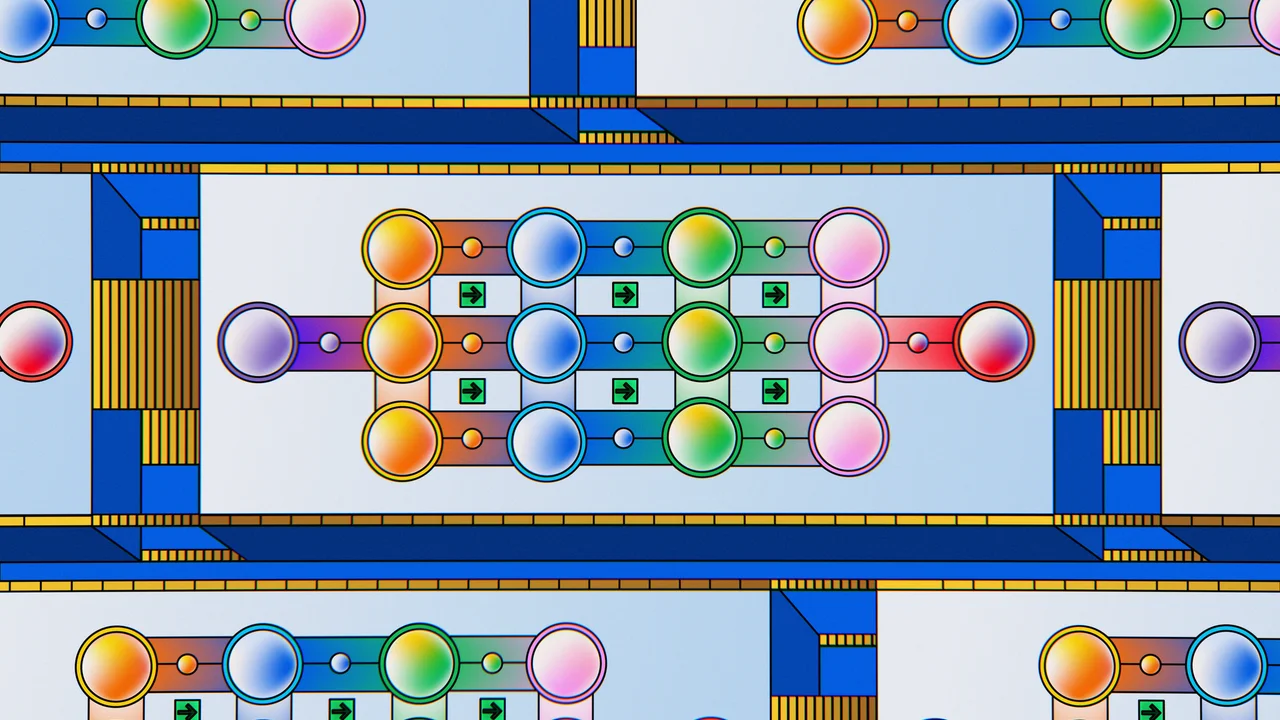
Look at the two ways of working side by side. Before isolation: every client lives in the same pool, you keep them apart by hand, and the quality of that separation depends on how alert you were the last time you opened the tool. After isolation: every client lives in their own sealed workspace, the separation is automatic, and your attention goes to the work instead of to policing the walls. One of those is a system. The other is a habit you are hoping holds.
And isolation is not only about avoiding leaks. It is what makes scale safe in the first place. You cannot apply one methodology across thirty clients if those thirty clients are smeared together in one context. Isolation is the precondition. It is the thing that lets one brain serve many clients without the clients ever touching.
“Scaling services and client-based businesses used to be hard or nearly impossible without a big team and lots of complexity. For the first time ever, that’s not the case. AI has changed that. We now have Intelligence as a Service.”
Why separate chats and folders are not isolation
Most people get this wrong, and they get it wrong in the same way. They believe that if they are careful, they are safe. A new chat for each client. A folder per account. A line at the top of the prompt that says “only use information about this client.” Tidy. Disciplined. And not isolation.
Let me be honest with you about what those habits actually are. They are hope, dressed up as a system.
A separate chat is not a separate environment. The model behind it is the same model, and many tools now carry “memory” that reaches across chats on purpose. A folder is a label on a file, not a wall around it. And a prompt that asks the AI to stay in its lane is an instruction, not a constraint. Instructions get ignored. Constraints cannot be.
The folder structure has six layers and a colour-coding convention. The data is still in one pool. You built an org chart for a problem that needed a wall.
This is the core of per-client AI memory: the separation has to be enforced before the AI answers, by the structure of the system, not after the fact by your own carefulness. Real isolation does not depend on you remembering to be careful. It holds even on the day you are tired, rushed, and working two accounts at once. Especially that day.
How does client data isolation actually work?
Let me walk you through this. There are two pieces, and they do different jobs.
The first piece is the shared layer: your methodology. Your frameworks, your standards, your way of thinking. This is meant to flow into every client’s work, because it is yours and it is the same everywhere. Call it the Brain. It is loaded once and applied across the board.
The second piece is the isolated layer: each client’s context. Their files, their history, their decisions. This is meant to stay put. It flows nowhere. When the AI works on a client, the system scopes access to that one client’s environment before it generates a single word. Your methodology comes down into the workspace. The client’s data never climbs back out.
That direction matters. Your thinking is shared on purpose. Client data is sealed by design. A system that gets the direction right gives you consistency without leakage. A system that does not, gives you a single pool where everything mixes and you call it convenience.
This is exactly the kind of control that frameworks for trustworthy AI are built around. The NIST AI Risk Management Framework is designed to help organisations incorporate trustworthiness into the design and use of AI systems. Data separation is not a nice-to-have inside that picture. It is one of the design decisions that makes the rest of the trust possible.

Where does client data leak in everyday AI tools?
Here is what nobody tells you when they sell you on using a general AI tool for client work. The leaks are not exotic. They are built into how the tools are meant to be used.
Cross-chat memory. Features that remember you across conversations are designed to pull context forward. Helpful when you are one person with one life. A liability when “context” means one client’s confidential details surfacing while you work on another.
Copy-paste between threads. When the tool does not carry context, you do. You paste Client A’s brief into a new chat to save time, then forget it is sitting in your clipboard when you start Client B. The tool did not leak the data. The workflow did, because the tool gave you no other way to work.
Shared projects and workspaces. Grouping chats into a project is organisation, not isolation. The underlying context is still reachable, and a project that holds several clients holds them in the same place. Whether ChatGPT is safe for client work comes down to this exact gap: it can organise your chats, but it does not seal one client off from the next.
Training on your inputs. On some plans, what you type can be retained and used to improve the model. That is a different risk from client-to-client bleed, but it lands in the same place: client data going somewhere the client never agreed to.
Using generic AI for client work is not a productivity upgrade with a small asterisk. It is a liability with a convenient interface. The output is generic because the input is context-free, and the risk is structural because the tool was never built to know what a client is.

How do you check if an AI tool isolates client data?
You do not have to take a vendor’s word for it. Ask five questions. The answers tell you whether you are looking at real isolation or a marketing page.
- Is there a concept of a client at all? If the tool only knows users and chats, it has nowhere to put a client. Isolation starts with the system understanding that a client is a distinct thing with its own world.
- Is access scoped before the AI answers, or after? Real isolation decides what the AI can see before it generates anything. If separation depends on your prompt wording, it is not isolation.
- Can one client’s data appear in another’s output, ever? The honest answer is either “no, by architecture” or “not if you are careful.” Only the first one is isolation.
- Is your methodology separated from client data? Your frameworks should flow everywhere. Client context should flow nowhere. A tool that cannot tell those two apart cannot isolate either one correctly.
- Does the tool train on what you put in? Check the plan, not the homepage. The default on consumer tiers is often different from the business tier.
These questions map directly onto how serious AI governance is framed. The OECD AI Principles put privacy and data governance among the core values that responsible AI is supposed to respect. A tool that cannot keep one client’s data out of another’s work is not meeting that bar, no matter how good the output looks.
How Client Intelligence isolates every client
Client Intelligence was built around this problem instead of bolted on top of it. The architecture is three layers, and isolation is the spine of it.
The Brain holds who you are: your frameworks, your standards, your methodology. Loaded once, applied everywhere. The Workspaces hold who your clients are: each client gets a sealed environment with their own files, history, and context, structurally separate from every other client. Your Brain flows down into each workspace. Client data never flows back out or sideways into another client. Above both, Intelligence Mode lets you think across your whole business without ever collapsing the walls between clients.
The separation is enforced by the structure, not by a setting you remember to enable and not by how carefully you write the prompt. Access is scoped to the right client before the system answers. That is the difference between a tool that hopes nothing crosses over and a system where nothing can.
For the deeper version of this, see how to use AI safely when serving multiple clients and the compliance angle in whether AI is GDPR compliant for consultants.

Who needs client data isolation, and who is overthinking it?
The practitioners who take this seriously are not paranoid. They just understand that the constraint is structural, and structural problems are not fixed by being a careful person. Let me be honest about both sides of this.
Client data isolation matters when any of these are true:
- You serve more than a handful of clients, and some of them compete with each other
- You handle confidential business data, strategy, financials, or anything under NDA
- You work in or with a regulated field where data handling is a real obligation
- You want to apply one methodology across many clients without their contexts mixing
If that is you, isolation is not optional. It is the floor.
But here is who should not spend a second worrying about this. If you have one client, you do not have a cross-client problem. If your work is fully public and nothing you handle is sensitive, the leak you are guarding against does not exist. If you are using AI to write blog posts and brainstorm ideas with no confidential input, a general tool is fine and a sealed multi-client architecture is overkill. Do not build a vault for a problem you do not have. That is just a different way to waste time.
The honest line is simple. The moment a second client’s confidential data enters the same tool, isolation stops being a feature and starts being a requirement. Before that moment, it does not matter. After it, it is the only thing that does.
Client Intelligence is built so that each client lives in their own isolated workspace, with your methodology applied across all of them and none of them ever touching. That is not a setting. It is the architecture.
For more guides on applied intelligence for service businesses, see the Client Intelligence blog.